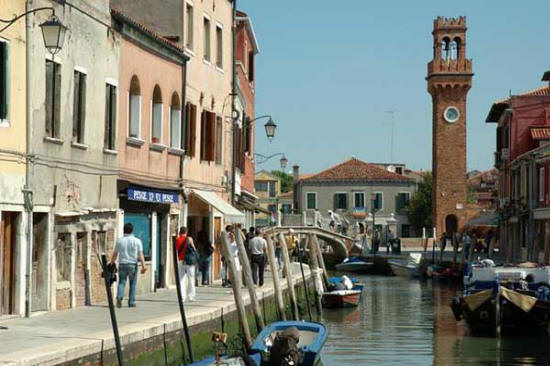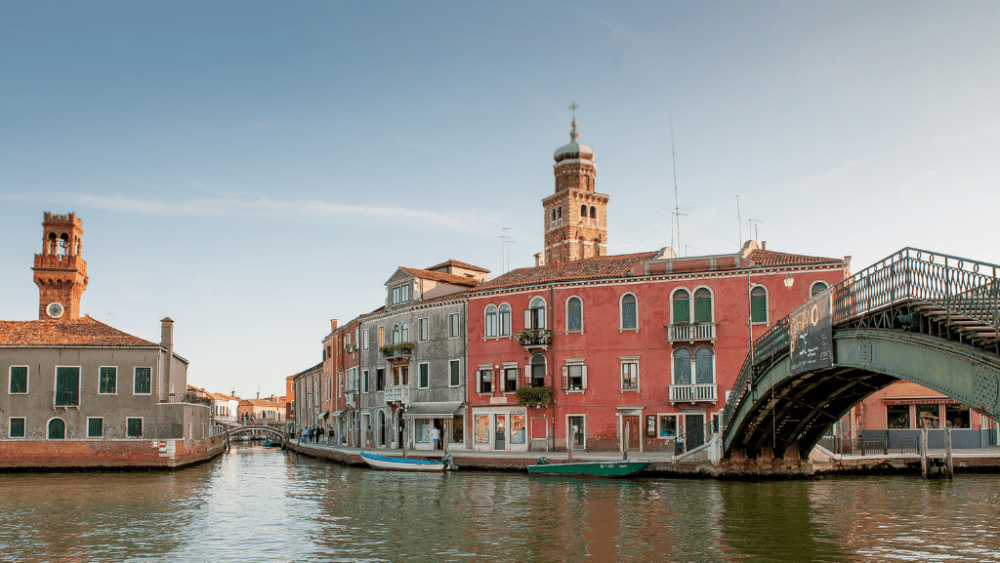
Where is Murano Island? When to visit it and why is it so famous? You might have heard about Murano glass and that it is produced on a little island in the Lagoon of Venice. The island of Murano is an enchanting place where time stopped and glass-making preserves all the charm of the past centuries.
The history of Murano glass and how the island became famous

Murano Island – a Glassmaker’s Paradise since 1291, is a tiny Venetian island and home to Venice’s glassmaking industry. Murano glass production was moved to this Island from the main island of Venice because its production posed quite a fire hazard (Note: the buildings in Venice were constructed mostly of wood at that time and the extreme heat that is required to make glass liquid so as to mold and shape it obviously caused the Venetians some concern).
Soon enough, Murano Island became quite a hot spot for Venetian glass production indeed. Glassmaking has quite an exalted tradition in Venice. It is an art form, after all. In the 14th century, the daughters of Murano’s biggest glassmaking families were allowed to marry Venetian noblemen.
This was quite a high honor indeed. Artisans were also allowed to carry swords and enjoyed immunity from prosecution which was a significant rarity in the Venetian city-state of the High Middle Ages and the Early Renaissance. During later centuries, Venetians would begin to build vacation homes on Murano Island because the fire from the kilns, which was used to make glass, was deemed to provide health benefits.
How to make Murano glass?

What is Murano glass? It is a glass that is made only on the island of Murano. The use of different materials makes the glass change its appearance, creating unique and suggestive visual effects. For example, sodium makes the glass surface opaque, or nitrate and arsenic eliminate bubbles.
There are two classes of Murano glass processing. The first one concerns the raw material: sand, soda, and other compounds, or the raw glass. These elements melt in special ovens to obtain the mixture. Lampwork with the use of glass rods, glass fusing, and “cold” processes such as decoration, engraving, and grinding is part of the second process. There are several workshops on the island to see how Venetian glass is produced.
How to identify Murano glass?

In general, the real Murano Glass has labels with the name of the workshop, moreover, artists generally engrave the names of the products. Always request the certificate of origin! Beware if you see the words “Vetro realizzato secondo la tecnica dei maestri muranesi”. The meaning is “glass made according to the technique of Murano masters”, therefore the glass is fake. Only purchase the glass in the Murano shops in Venice.
Things to do in Murano, Italy

When you get to Murano Island, you will want to visit the Museo Vetraio, the glass museum. There is also a Modern and Contemporary Museum which features more current Murano glass art. The Church of Saints Mary and Donato is a wonderful building, originally dedicated to the Virgin Mother.
It contains a magnificent mosaic pavement that dates back to the 12th century. If you wish, you could also take a private tour of some of the glass-making houses that still call Murano island their home and do some shopping along the way. You’ll love this beautiful island that is still a testament to a wonderful Venetian tradition that has withstood the test of time.
Best time to visit Murano Italy

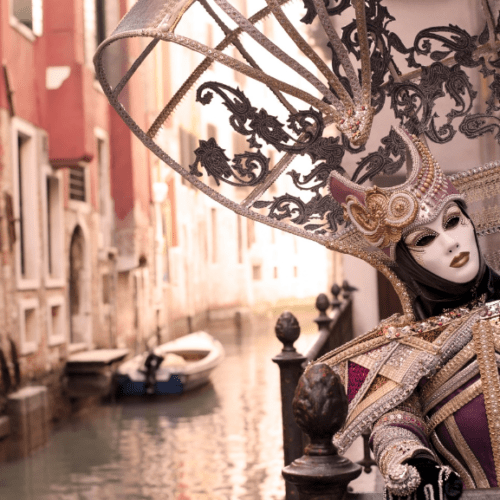
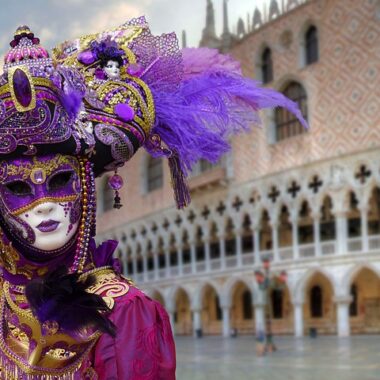
Even though there is no real best time to visit the island, in general, to visit Venice it is better to avoid the hot summer season because the weather becomes particularly hot. Also during the Venice carnival and Venice Film Festival, streets are very crowded. The best moment to visit the island is during spring or early autumn. The weather is fresher and you will enjoy our visit! You can get there by Vaporetto, the public water bus, or by a private motorboat taxi. Here are the vaporettos:
Piazzale Roma: line 4.2, every 20 minutes and reaches Murano in 35 min.
San Marco: line 4.1 every 20 minutes and reach Murano in 25 min.
Fondamenta Nuove: lines 4.1 and 4.2 every 10 minutes and arrive in Murano in 8 min.
Islands nearby
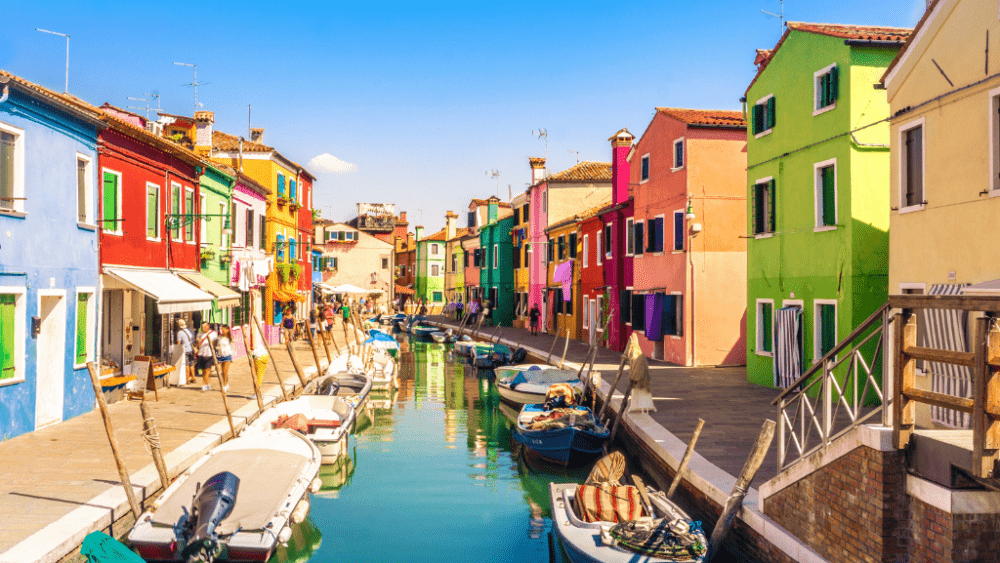
During your trip to Venice, it would be a shame not to visit other pretty Venetian islands. For example, the second Vaporetto stop after Murano is the charming little island of Burano. The island has colorful fishermen’s houses. Especially if you are spending your honeymoon in Venice, you can’t avoid taking pretty pictures on this island, that will be the perfect scenario for your photos! Lido island is a popular destination for those who prefer to relax at the beach, moreover, it is the location of the Venice Film Festival. So if you plan a day trip from Venice these islands must be your first choice!