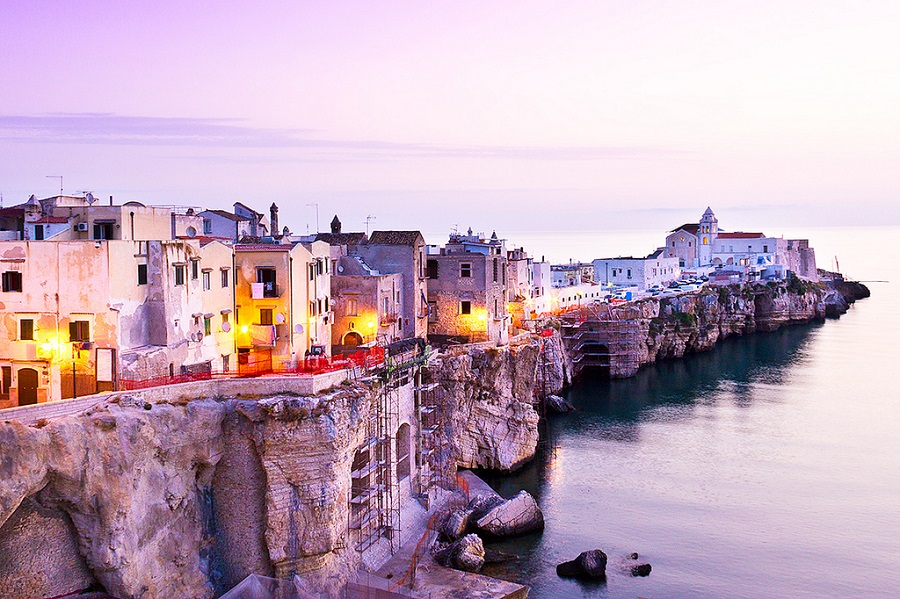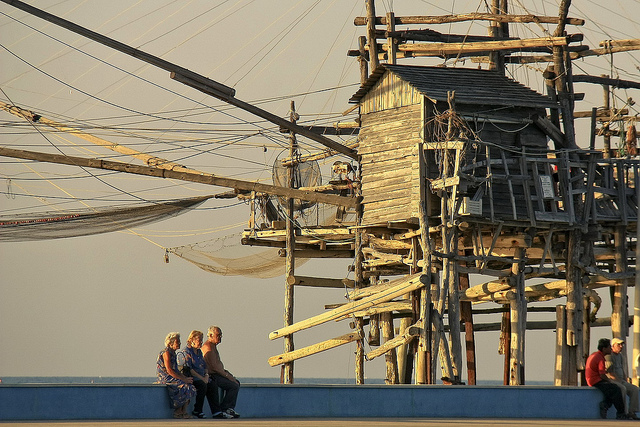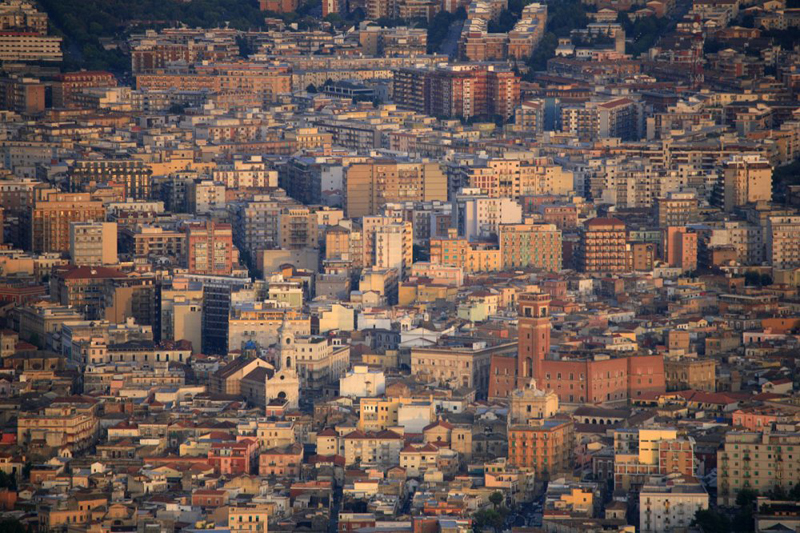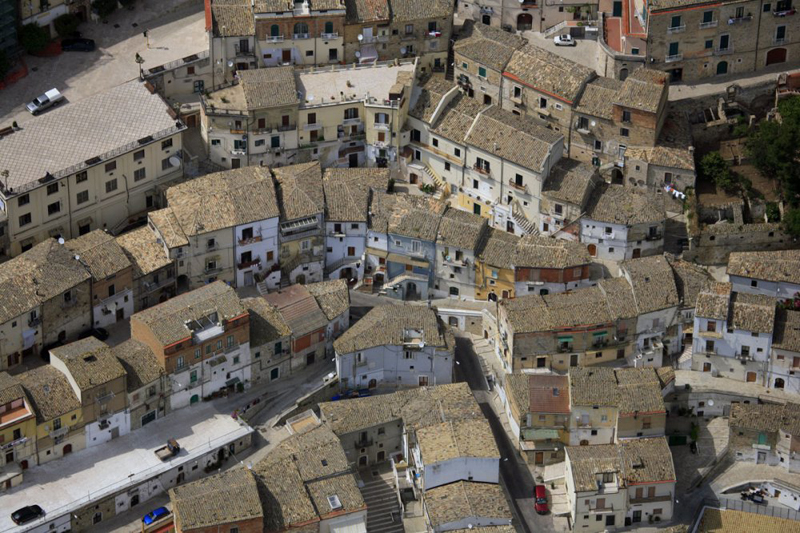
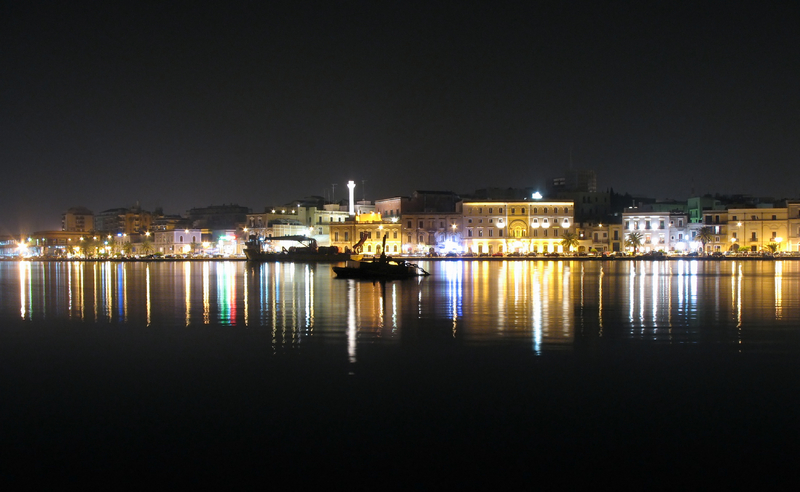
There is something about a beach, a harbor, and the coastline in general that fills you with freshness and a sense of awe. If you throw in a peak at a sunrise or sunset, then you are doing even better. If you are in the south of Italy, there is much coastline to take in and see. One such spots is the ancient city of Brindisi.
Brindisi is in the Puglia region of Italy, specifically on its south-eastern coast, just north of Lecce. It is an integral part of the Salento peninsula, serving as the capital of the province of Brindisi and right on the Adriatic Sea.
Like its neighbors to the north and south, this area has also been touched in the past by the influence of ancient Greece, as it was founded by Greek settlers. The poet Pacuvius was born here and the great Virgil, poet symbol of ancient Rome and its greatness, died here.
The city’s name derives from the ancient Latin Brundisium, which comes from the Greek brentesion meaning “deer’s head”, referring to the shape of its natural harbor. The symbol also appears in its coat of arms, which includes a war cross for the civilian victims of World War II.
Brindisi’s port is a major draw and has been since its foundation. The Romans made this a central port for their naval power and maritime trade. It continued to be an active port as a major point of embarkation for Greece and lands eastward. Before air transportation became so common, it was the gateway to the east for many. The silk trade had its route through Brindisi. Silk would be loaded from trains onto the English ships that continued the journey from London to Bombay. The Crusaders used this port to sail to the Holy Land. The significance of this port continues to this day as it is a major naval hub, for the Italy-Greece route. The Italian Navy uses this port as does NATO. It was also connected to Rome through the Via Appia and Via Traina.
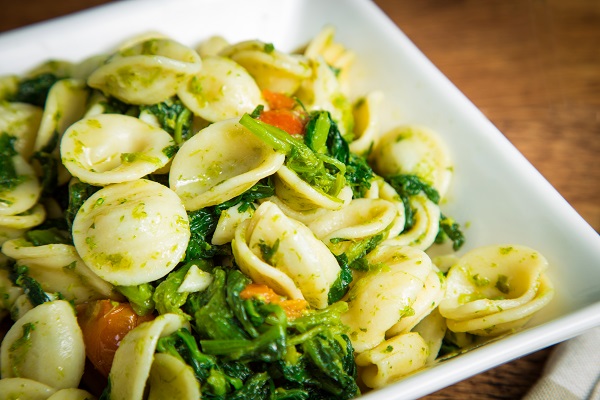
As you move south, Italy changes a little. Dialect change, the coast changes, even the food takes on a more Greek-like, Mediterranean flavor. You will find different languages spoken here, as well. But one thing is certain, you will sure fall in love with the beauty of this part of the country.
As with many Italian cities, Brindisi has seen its share of conquerors, earthquakes and destruction from World War II. But, in true Italian fashion, the city has risen from its ashes and managed to harmonize what was left from the past, with the new.
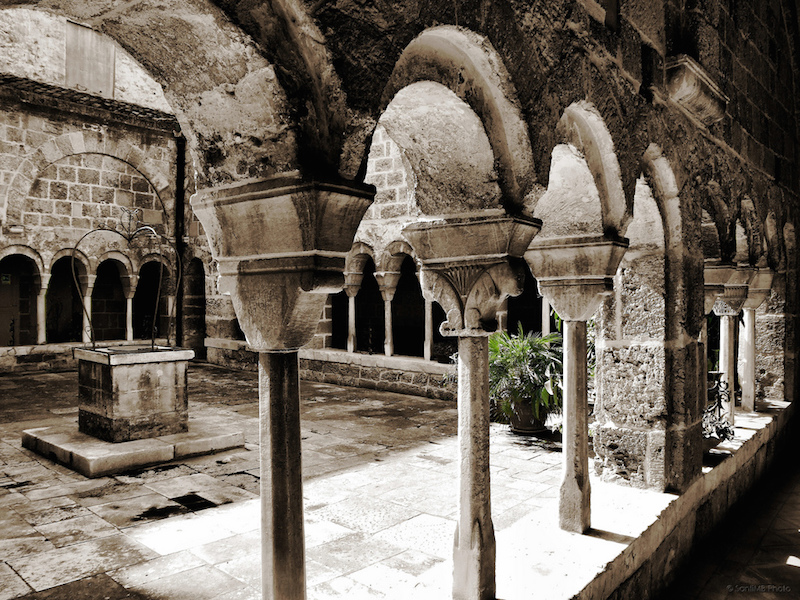
Sightseeing Attractions in Brindisi
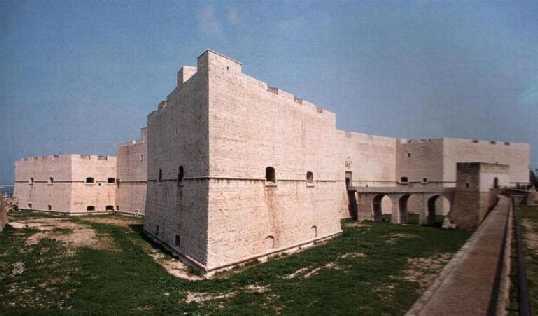
The Castello Grande, built by Frederick II, typifies much of the ancient buildings here. It was built in the 13th century with massive square towers and a unique trapezoid plan. It has seen many uses over its long history: it was even used as a penitentiary in the 1800s.
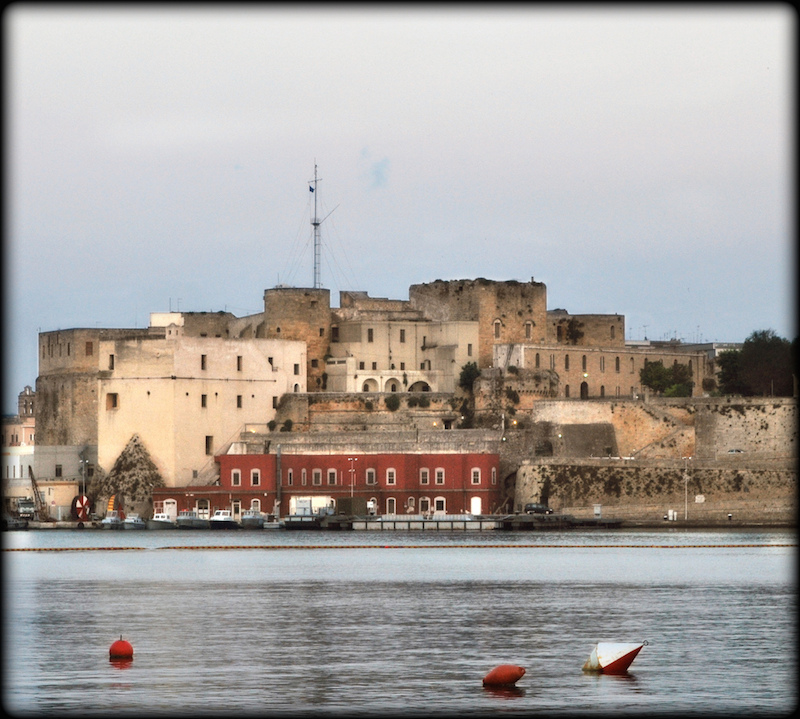
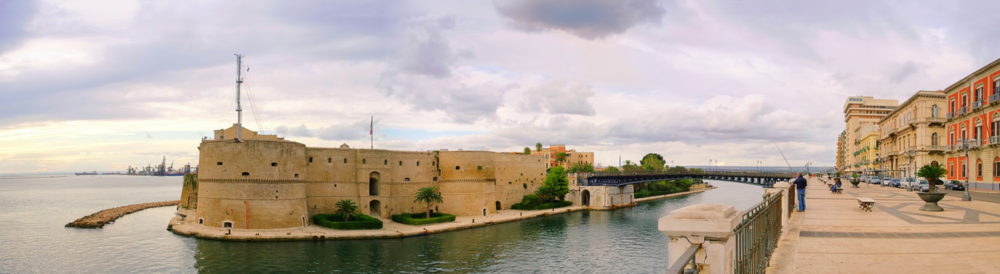
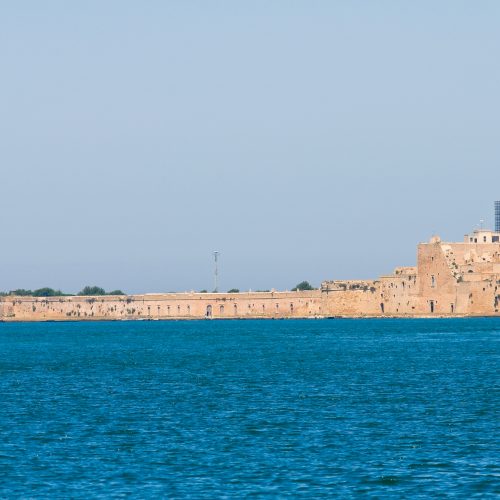
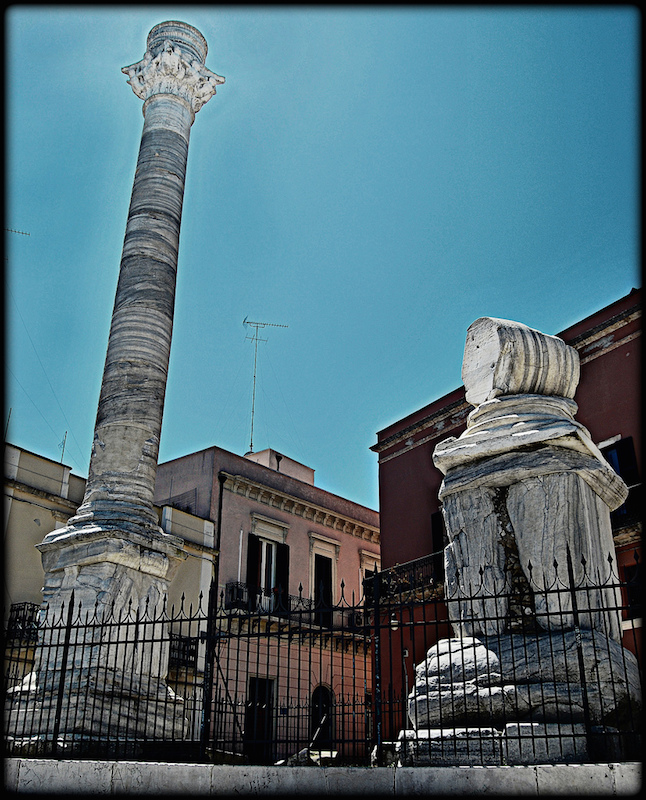
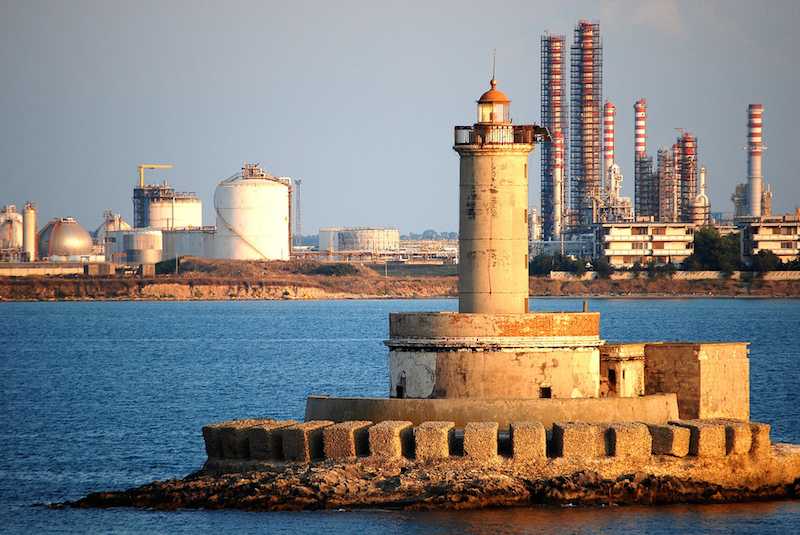
The Aragonese Castle was built in 1491 on the Sant’ Andrea Island facing the port. Called the “Sea Fort” (to distinguish it from the “Land Fort”, the swabian castle, above), it dates back to the 1490s. The signature structure of Brindisi, though, has to be its two ancient Roman columns, of which only one is still extant. The other crumbled in 1582, and the ruins were given to Lecce to hold the statue of Saint Oronzo (Lecce’s patron), as the Saint was thought to have cured the plague in Brindisi. The columns were once thought to mark the end of the Via Appia.
There is a small stretch of the old Via Appia still travelled by many today, although paved over: that stretch opens up in downtown Brindisi, highlighted by giant steps and the two columns. Many take advantage of the downtown area to take a stroll down the very steps that the ancients have walked, although today it is usually for an ice cream and not to chase down Spartacus and his friends.
Those wanting a better feel for what life was like during Roman times may take a look at the nearby archeological site of Ignazia, which does showcase part of the Via Appia.
The city of Brindisi played an important role during World War II, especially in the last years of the conflict: in fact, between September 1943 and February 1944 the city functioned as the temporary capital of Italy, when the king, Vittorio Emanuele III, his entourage and the head of the military abandoned Rome after the fall of the Fascist régime.
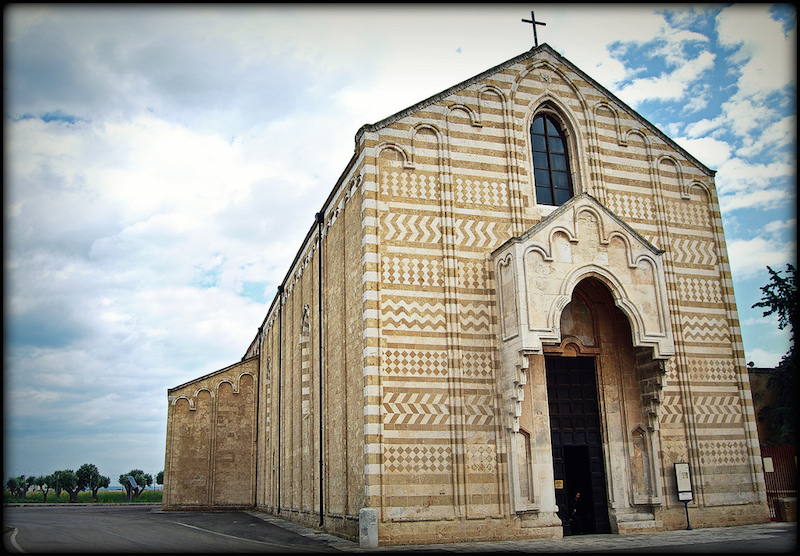
Other sites worth taking in include the Duomo, built in the 11th and 12th centuries and restored in the 18th after an earthquake. Parts of the original mosaic flooring can still be seen. The Church of Santa Maria del Casale, with its façade of geometrical patterns, as well as the Portico dei Templari, both built in the 1300, beguiles any visitor with its architecture, engineering and art.
If you are looking for something off of the sacred architecture tour path, then check out the natural reserve of Torre Guaceto and the Grand Fountain. The Romans loved their fountains which they built along the Via Appia. This one is still in perfect conditions and was restored in 1192.
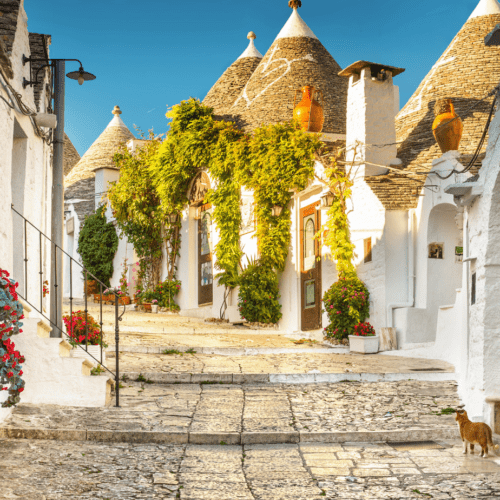
This city of 90,000 is also a great starting point to visit its beautiful surrounding area. Ostuni should certainly be on your agenda: only 35 km outside of Brindisi, its array of Greek and Arabic architecture, along with its festivals and cultural events during the Summer, makes it an attractive destination.
How to get to Brindisi
The Airport in Brindisi (Aeroporto del Salento) connects the town to some destinations in Italy and Europe; it’s only 6 km out of town and there are both a bus and taxi service connecting it to the city centre.
If you travel by car from the North, on the Motorway Adriatica A-14 Bologna-Taranto or the A-16 Napoli-Canosa di Puglia, exit at Bari North and take the A-14/E55 towards Bari Centro/Brindisi, then the SS16 and follow the direction to Brindisi. If you arrive from the South, on the SS106 Jonica (Reggio Calabria – Taranto), take the E90/SS7 towards Grottaglie/Brindisi.
There’s a main train station in the town centre and smaller ones in the surrounding area; Brindisi is connected by train to the coastal towns on the Adriatic and to Taranto.
Ferries connect Brindisi to Albania and Greece.
Accommodation in Brindisi
In the town centre of Brindisi there are many accommodation options, from cheap B&Bs to four star hotels. If you prefer a relaxing place, the country house Masseria Baroni Nuovi is about 25 km from town and 8 from the beach. If you rather stay closer to the sea, the Hotel Mirage is a good option, right on the beach of Santa Sabina. The Mercure Grand Hotel Internazionale is beautifully located in an 8th century building and only a stone’s throw from the beach.
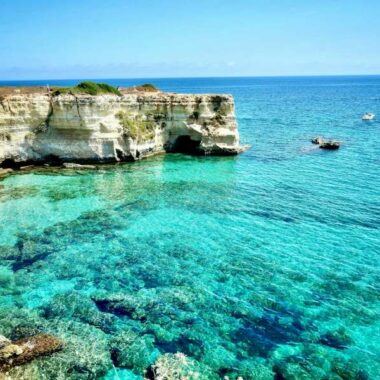
Great food, wine, together with coastlines filled with beautiful sandy beaches and rocky cliffs: all this is the Salento, and Brindisi is right at its heart.
Brindisi is a very charming old town where Roman ruins, old piazzas, churches and, of course, the sea, will make your holiday experience truly and astonishingly unique.