Fiat 500 ( cinquecento ): A name, a story, a myth. A car that lasts through decades.
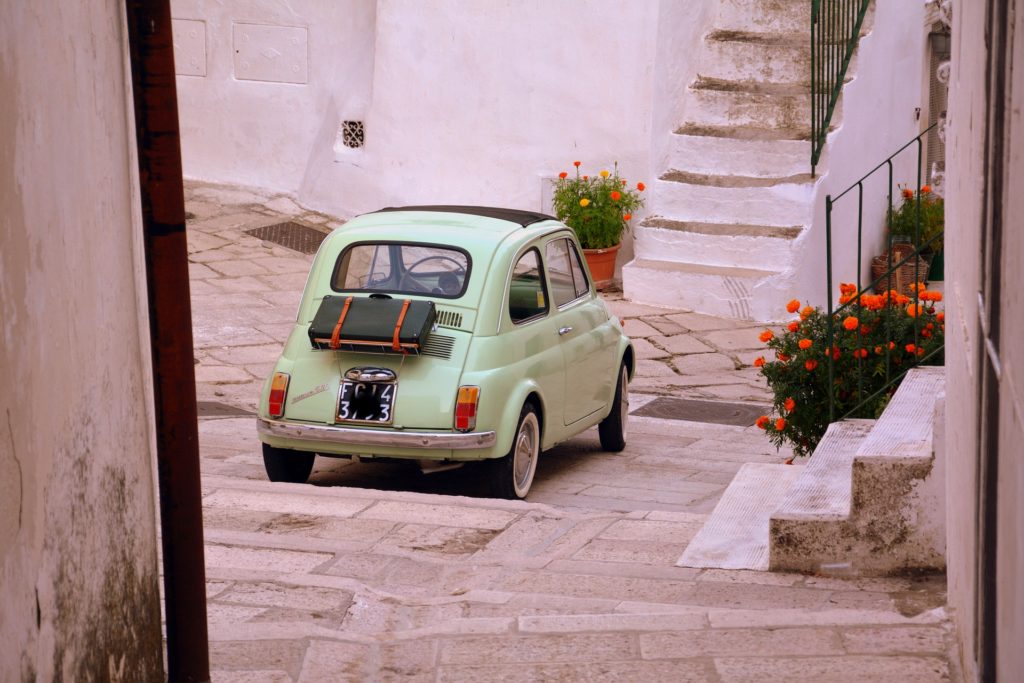
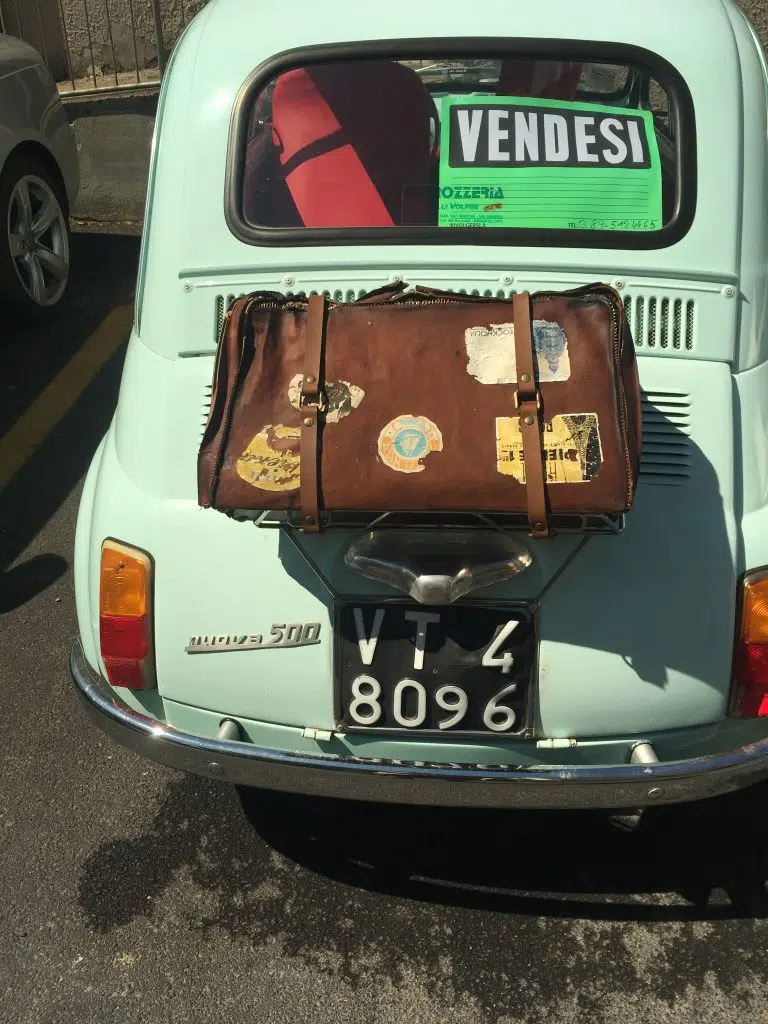
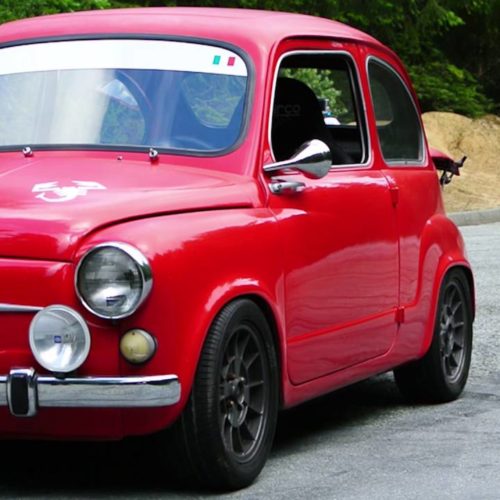
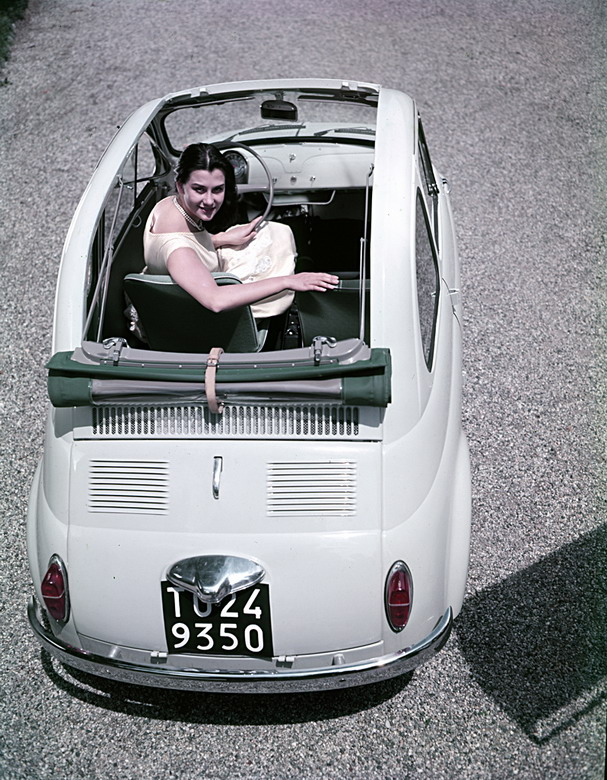
I remember that growing up, my mother had a green Fiat 500, just like the one in the picture above, she used to drive my friends, siblings, and me to the seaside. We never thought the car was small: the car represented fun for us. Italy was experiencing an economic boom at that time so most middle-class families, like mine, had a second car — the large car for family vacations and the small city car for . . . the wife (yes this was the 1950s and that was the way it was.. not quite right but at least women could drive in Italy in the 1950s. It is hard to believe that in some countries women are still fighting for the right to be able to drive today in 2021). At the time, however, nobody would have imagined then that the car will become such an icon. Together with the Ford Model T, the VW Bug, the Mini Minor, and the Citroen 2CV, the Fiat 500 was destined to become a classic.
The beginnings of the icon
Fiat started its adventure in 1899. Ever since, it has manufactured classic and revolutionary cars…. well at least for the first 50 years. In the 1930s, Benito Mussolini (like Hitler with the VW bug ) wanted a car accessible to most Italians. Dante Giacosa designed the vehicle, nicknaming it Topolino (tiny mouse). From 1936 and 1955, this was the tiniest production car in the world. And the Topolino sold 500,000 units.
In 1955, Fiat launched the mid-size, rear-wheel drive 600. Later, this model became the base for the 500. The Italian manufacturer wanted to create a small and efficient car, ideal for traffic and the tiny, narrow, Italian roads. Hence, the concept of the “city car” was born. And in 1957, the Fiat 500 emerged. It was the first small car that maximized interior space. The name of the new 500 was chosen to underline the lineage and commonality with the 500 “Topolino”, as the lowest-cost car in the Fiat range, set at 490,000 lire, equal to about 13 months of salary for the average worker.
In July 1957, Fiat presented the 500, a very small utility car with a two-cylinder engine and a maximum speed of 85 kilometers per hour. Only two years had passed since the release of the 600 and the launch of a model more or less similar to the previous one seemed foolish to many, as it was thought that it would end up competing with the other. It seemed even more foolish given that a special assembly line had to be prepared for a potential of half a thousand cars per day. But after the price of gasoline had risen due to the Suez crisis, Fiat had hurried its engineers to produce as soon as possible a super-utility car that consumed as little as possible. Dante Giacosa had had to work miracles for the speed of the project, and designing a car that solved a number of technical challenges and could be sold at a price well below that of the Fiat 600.
In the end, Dante Giacosa succeeded by creating a model with low fuel consumption and operating cost, and with excellent road handling. Nevertheless, the release of the new small car was a major failure at first — not because the car was tiny, but because the engine power was too modest, only 13HP! In addition, the original 500 didn’t have a proper seat in the back, and lacked any accessories. Fiat had to hurry to present a new version solving these issues, which would be more appreciated by the public, in early November at the auto show in 1957.
My Note: When I moved to America it was a common joke saying Fiat stand for ‘Fix it again Tony’ …. and that was the nice description, the other was more on the line of F.. Italian automatic trash……. Was this nasty nickname deserved? probably yes if we consider the car of the 70s and 80s. But the 500 was so well built that many are still roaming the Italian roads today, 60 years later. There are several still circulating in my town of Bolsena. I do not know another car (except potentially the VW bug) with such an impressive record. How many Smart cars will be still circulating 60 years from now? How many Smart cars will be circulating in 2081? I bet you there will be still a handful of 500 going at that time, but I am not so sure there will be still Smart cars on the road.
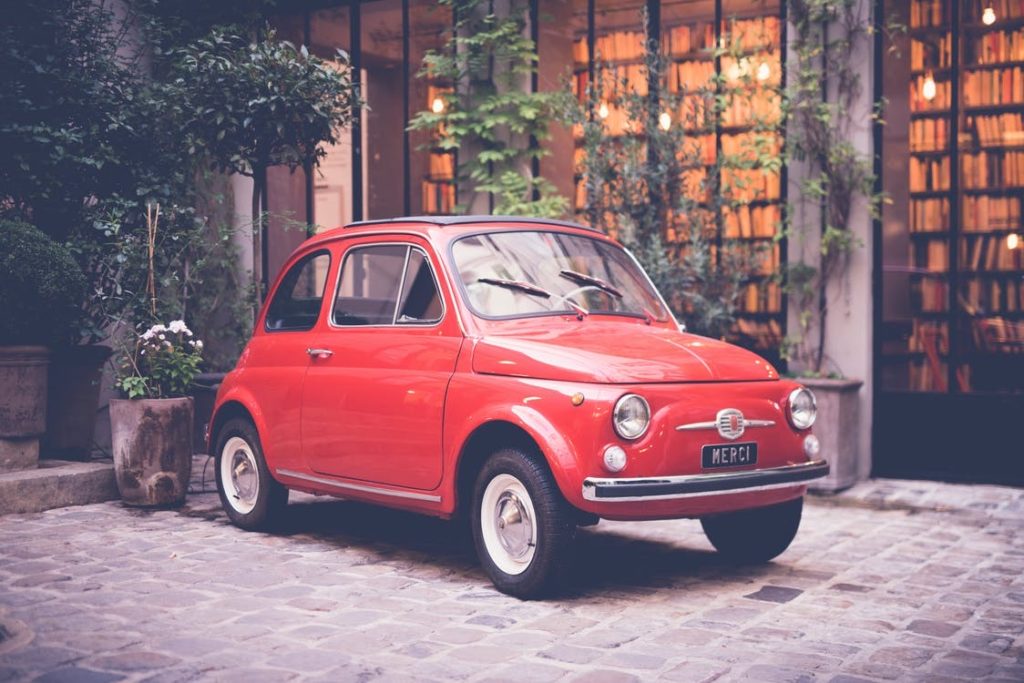
The first models of Fiat 500
- The Nuova 500 – (1957-1960)
The dimensions
The New 500 had only two seats and a rear bench. The car could only accommodate two people but could carry up to 70 kg of luggage. It was 2.97 meters long, 1.32 meters wide, and 1,325 meters high. It had a wheelbase of 1.84 meters. When empty it weighed 470 kg, and at full load it reached 680 kg. ( In imperial its dimensions were 9 feet 9 inches long, 4.3 feet wide and 4.3 feet tall. The wheelbase measured 6 feet and it only weighed 1,100 pounds).
The revised 1957 model was an instant success. It was fuel-efficient, fun, and actually spacious. People called it the people’s car for Italy, referring to the Volkswagen Beetle (Volkswagen itself means “the people’s car” in German). In fact, a lot of the car was based on the Beetle, more specifically in the rear engine.
The New 500 had a small engine, the smallest of all the models in production, the “110” design engine. It was a new 2-cylinder in-line, air-cooled petrol engine (it was Fiat’s first air-cooled engine) with a capacity of 479 cc, capable of delivering 13 hp. The gearbox was 4-speed with quick engagement in 2nd, 3rd and 4th.
Nuova 500 with sunroof: The next technical changes focused mainly on increasing the roominess of the rear seats (in the first series only a lightly padded bench), the real limit to the success of the Italian car. Thus was born in March 1959 the “New 500 sunroof”: the first 500 with (almost) “four seats”. Price and mechanics were unchanged from the previous “normal” 15 HP (which disappeared from the list). However, Fiat increased the strength of the rear axle in anticipation of the greater transportable weight. The great innovation introduced by the Sunroof was obtained by raising the roof by a few centimeters where a sheet metal part was inserted which extended from the base of the rear window forward to halfway up the roof. The Nuova is one of three models featuring “suicide doors”. There was also a stylish Sport version of the Nuova, which features a distinctive red stripe and a more powerful engine, bored out to 499.5cc from the original 479cc engine and with a longer stroke, thus producing an impressive 21 bhp from the same original block.
- The Fiat 500 D – (1960-1969) Replacing the original Nuova in 1960, the D looks very similar, but there are two key differences.
The “Nuova 500 D” was presented in 1960-1965
A big step forward in the evolution of the car had already been taken with the “sunroof” of 1959, but the Fiat D is still considered a new model. On the outside, the differences between a “sunroof” model (with updated lighting) and a “D” are really minimal. The substantial difference of the Fiat Nuova 500 D lies in the engine which was again strengthened, as well as increased. The displacement went from 479 cc to 499.5, the same as the Sport, but with a mesmerizing power of 17.5 HP!
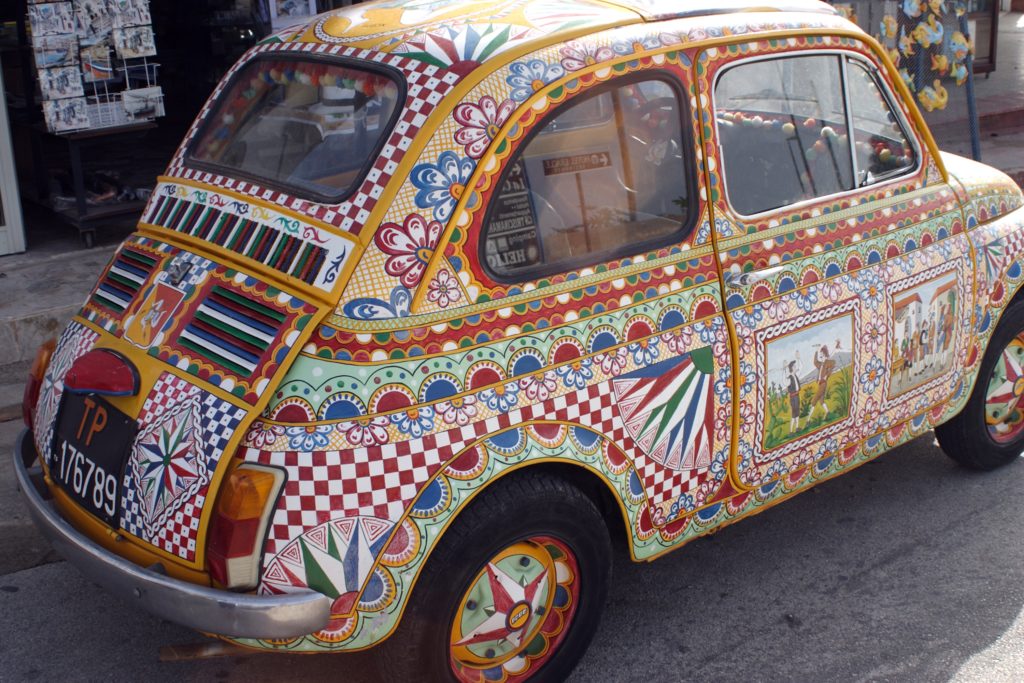
One is the engine size (the D features an uprated 499cc engine producing 17 bhp as standard – this engine is used right through until the end of the L in 1973) and the other is the roof (the D roof does not fold back as far as the roof on the Nuova). The D also features “suicide doors”.
Fiat cinquecento In the 70s
- The K or Giardiniera – (1960-1977) The longest running model, the K is the estate version of the Fiat 500. The engine is laid under the floor of the boot to create a flat loading surface. The roof on this model also stretches all the way to the rear, not stopping above the driver and front passenger as it does in other models of the same period. Very useful if you need to carry a “tall” load! The K also features “suicide doors” and is the only model to continue to sport this door type into the 1970s.
- The F or Berlina – (1965-1972) The F spans two periods of 500 production, the D and the L. As such, it is the most frequently misidentified model. Between 1965 and 1969 the F carried the same badging as the D and the two models are only distinguishable by their doors – the D has “suicide doors” and the F does not. Between 1969 and 1972 the F was sold alongside the Lusso model as a cheaper “base model” alternative. While the F and L are mechanically very similar, the key differences are the bumpers (the L has an extra chrome nudge bar) and the interior (the F interior is nearly identical to the original 1957 design while the L sports a much more modern look).
- The L or Lusso – (1968-1972) The penultimate model, the main change for the L is a much modernised interior (including a renewed dashboard) which brought the Fiat 500 up to date. Greater comfort and style were provided in this new model for the new generation.
- The R or Rinnovata – (1972-1975) The last incarnation of the Fiat 500, the R, was arguably the best model. It had a larger 594cc engine, giving it a much more sensible power rating of 23 bhp, and contrary to many translations of the FIAT literature, came with a non-synchromesh “crash-box” transmission. Sadly, it was also merely a stop-gap for Fiat. It plodded along for another two years beside the Fiat 126 but in the end Fiat made the only sensible choice – to retire the Fiat 500 R once and for all.
Through all the time the 500 was available, it always sold. The US did not receive the 500, although classic car dealerships sometimes have them as imported items, as many from Europe have fallen in love with this tiny and beautiful car, and how many are still flying around Italy roads.
Fiat 500
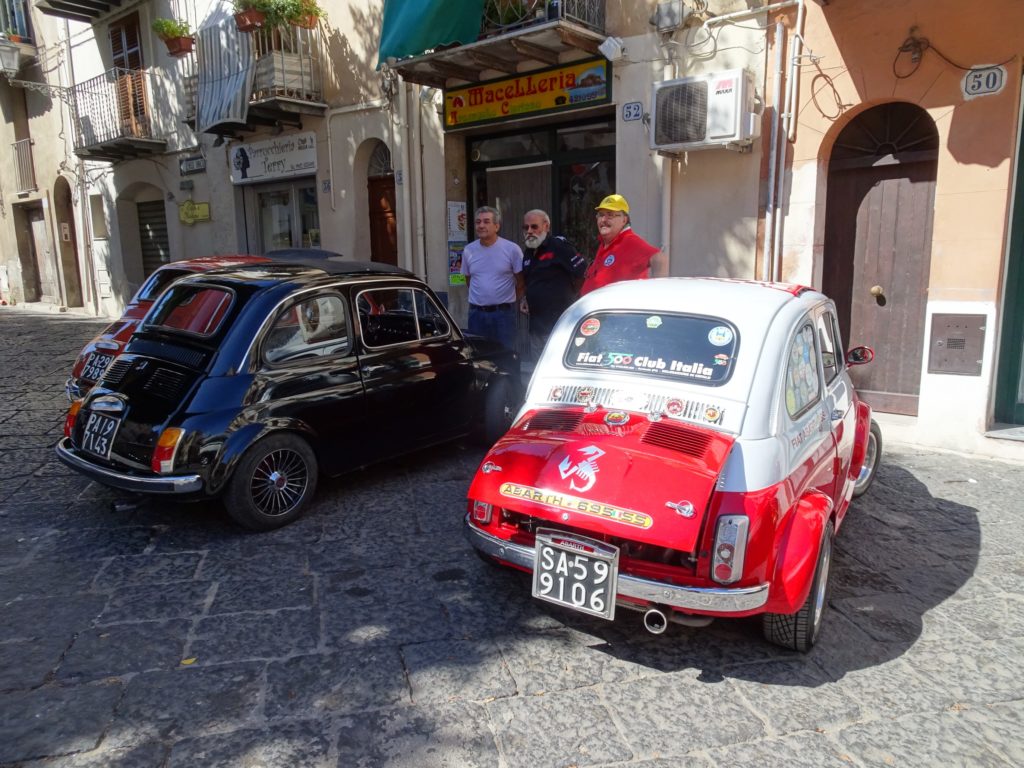
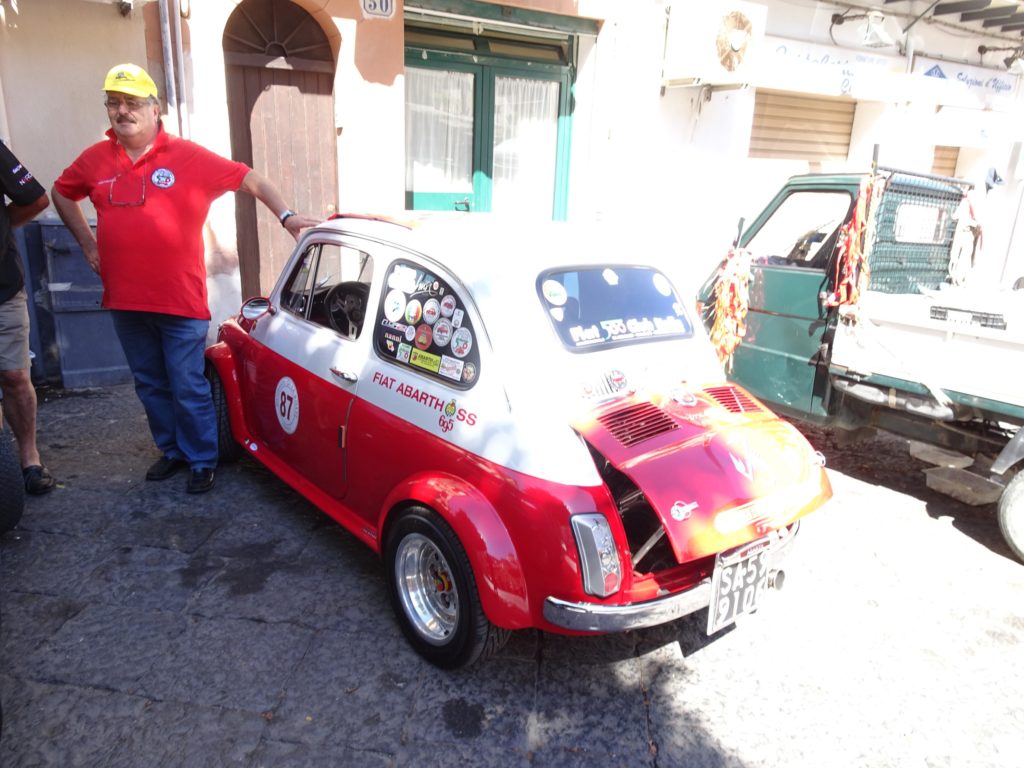
The first 500 was followed by the Fiat 126. The 126 never had the appeal of the Cinquecento and it had a tendency to rust and while the Fix It Again Tony was appropriate for the 126 and very few are still on the road in Italy. The 500 has been roaming the Italian roads for 60 years, we know nothing lasts forever but this small car surely seems to be challenging the saying.